
ARTICLE
Cracking the Lean Code
*It is four decades since University Professors and Researchers have been studying Toyota and trying to understand what they do and how. Toyota was the mother of ‘Efficiency Innovation’ yet contributing to economy, growth and jobs. Today those studies have been documented into books. The mistake most make is in trying to copy the templates and hence fail, whereas what works is in applying the thinking as I enumerate below. There has been an oversupply of seminars, training, masterclasses etc. Almost everyone has heard about lean manufacturing and claim varied degree of expertise; many claim to be ‘doing it’, some even claim to have become ‘lean’! Why then are we yet to see a Product Maker (OEM) replicate Toyota or Mysore Kirloskar? Why do all lean claimants fall short of being truly lean? Let’s revisit the fundamentals to know … *
Markets everywhere are witnessing the trends of ‘customer empowerment’, ‘mass customisation’ and ‘disruption’. These trends have made products better, more customer-centric, cost-effective and even changed the way businesses are conducted. Lesser lead times for product introductions, shorter product life cycles, fluctuating demand, varying share of businesses, just-in-time (JIT) supplies and expectance of price reductions annually have characterised business over the past decades and are here to stay.
Old business models that worked well before are no longer effective. Some are not even relevant; disruptions of various kinds have become a constant, forcing companies to revisit their business strategies and processes to find innovative ways for delighting customers continuously by offering products and services that exceed their expectations in areas of features, quality, price, purchasing and convenience of use. This is the only way of gaining and retaining the competitive advantage in the market place. Companies that succeed in creating value for their customers by offering outstanding products and services at competitive prices will be able to survive and prosper. It is not a one-time effort; it must be a continuous activity that results in ever-increasing value delivery to its customers.
Bringing down the cost of production through improving productivity by the elimination of wastes from the value stream has to be the major objective for all industries. The Lean Manufacturing System, which is a systematic approach to productivity and quality improvement through waste elimination will be a major enabler in the cost reduction drive of companies. The main objective is to deliver what, when and where the customers want, using a minimum of human effort, inventories, resources and floor space at the highest possible response speed.
Profit is relative to satisfaction, inefficiency and also a blinder, for many businesses do not realise how much money they lose when they make some profit. The principles that Taiichi Ohno first pronounced after decades of work is known to us as the Toyota Production System. Outside Toyota, it is ‘Lean Manufacturing’ in manufacturing business processes and ‘Lean Management’ in nonmanufacturing business processes, which offers all organisations with the best option to find strategic solutions to gain competitive advantages.
**How to go about the change process?
**
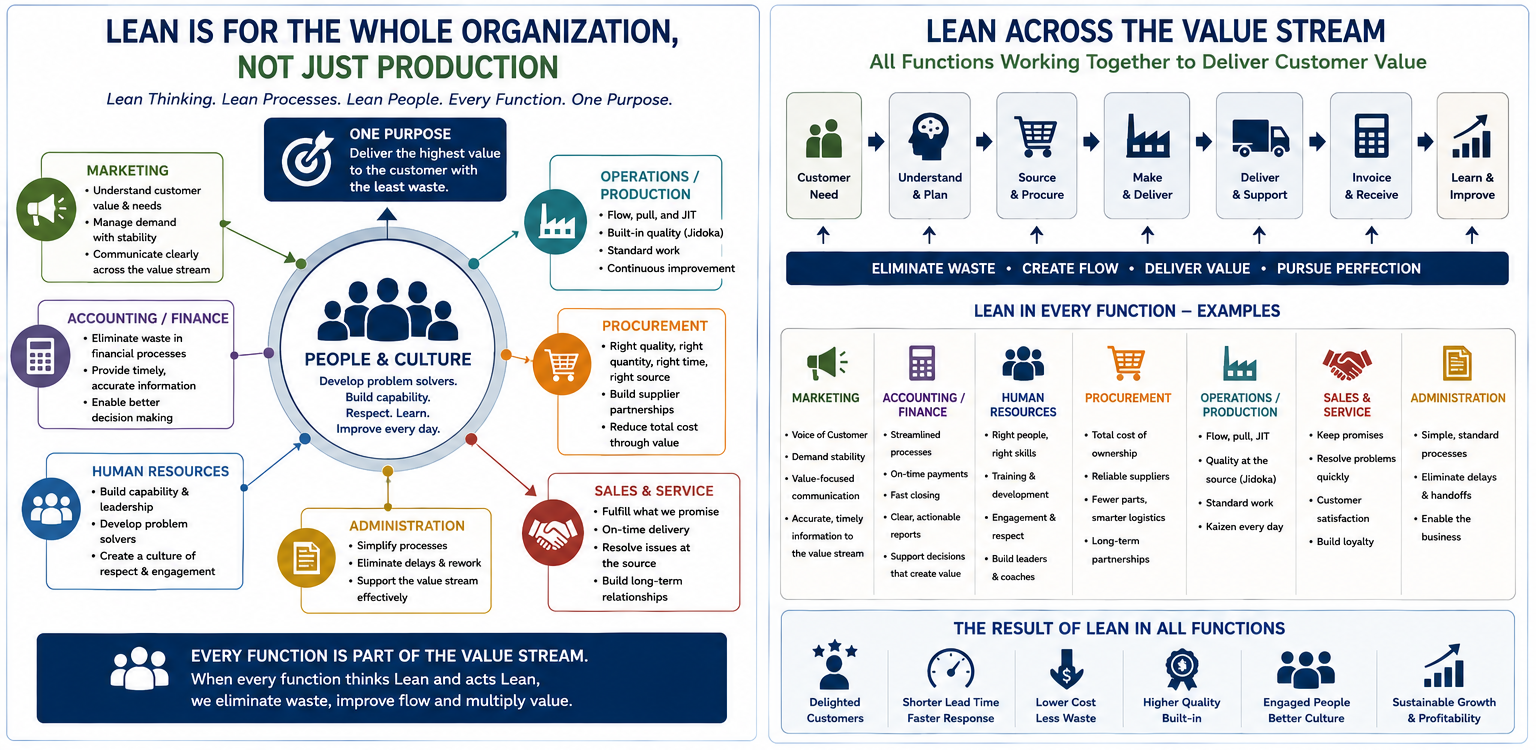
Lean is an end to end solution and constantly needs a value stream perspective. It is a top-down effort. I have found it easy to work on the change processes across the value stream simultaneously at all places starting first from the customer end.
Critical Success Factors:
Among the critical success factors are acquiring knowledge of lean methodology, top management involvement, support, and employee involvement. The key principles are – doing things differently, believing that change is continuous, accepting that the leadership needs to get training and learning to be equipped with the knowledge necessary for lean transformation and to build the lean culture and lead the transformation across the organization.
Top Management Support:
Lean Manufacturing System is the best known competitive strategy today, an improvement that would touch every aspect of the working of a business and it calls for major readjustments. Such an effort can only succeed with the active and visible involvement of the top management. In places where the CEO is not on-site or at the core value stream, then, he must empower an implementor with authorization to take all the decisions meaning the buck stops with him. The lean initiative should be elevated to the state of company level number one strategic initiative. The organizational responsibilities should be rearranged in such a way that shop floor managers would be responsible for the value streams instead of conventional departments. Operators should run the production without the ‘interference’ from staff and management; whose job then would be to make systemic improvements, train the workmen and participate by assisting operators to solve problems. Lean metrics should be made a part of the annual performance appraisal.
Lean is a top-down effort. Change and transformation require to be led from the top, with a focus on the entire value stream from customer to the last vendor. Subcontracting the leadership to the middle may at best result in small isolated improvements with no impact on the financials. Every CEO wants his company to become lean, but most have excuses for not leading the transformation, resulting in it being subcontracted to the middle. It doesn’t work that way because in such cases the biggest disrupters of the process are the uninvolved top management, thereby sending their company to the graveyard of failed lean attempts. Some years ago there was an intense discussion in the global lean community on professional networks discussing the various reasons why people fail with lean, and the reason for failure attributed by most was top management not being involved as they should.
Employee Involvement:
Involving the employees who will have to work in the lean transformation right from the start of the change process is essential. The objectives should be clearly explained and their ideas for improvements must be solicited and seriously considered. If explained properly and if there are no hidden agendas of the management, the employees will normally be happy to participate in the improvement process.
Methodology:
It is not always necessary but can be an advantage to implement Lean Manufacturing System with the help of a Sensei (a teacher who has enterprise lean transformational success stories and experience under his belt). In majority of cases businesses in existence aspire to become lean. I do not believe in a model cell creation for many reasons. A lean journey begins by understanding ‘value’ (lean’s first principal) and then develop a strategy to deliver that value in the most efficient way. Remember lean is strategy work. Understanding the customer demand in terms of cost, quality, delivery logistics, lead times, demand rate and fluctuation bandwidth, sale rates, prevalent gaps, customer satisfaction levels, product strategy, generic strategy if used, competitive forces and competitors, SWOT, core competencies, portfolios analysis etc. are necessary in designing a company’s lean journey. These variables are specific to every company and differ from one another. Nothing is written in stone nor is there a single template that one can apply to all businesses in all segments to transform them to become lean. That’s why every company’s lean journey needs to be strategised and designed specifically, templated thinking will just not work, period.
Most companies work on the push system where variations are internally produced usually from weak marketing, production and procurement systems that are visible in frequent plan changes or schedule interruptions. So excess inventory and wastages of various kinds are only to be expected. Therefore knowing that a company is engaged in the push system is in itself actionable information. Lean is a strategy that has to be applied end to end (customer to last vendor); so I recommend applying it across the value stream concurrently. Many make the mistake of thinking that lean is meant for the shop floor. Most lean teachers or trainers jump to shop floor struggling to make it lean, whereas the triggers of variables are completely elsewhere. Lean being a discipline of the higher-order, top management will have to imbibe and practice the new attributes of lean systems, processes, behaviour, routines, work ethics, personal discipline, commitment and a vision of the entire value stream. Begin your lean journey in the customer interface, set things right here so there are no surprises in the subsequent processes.
How much time will it take?
The rate of change or the speed of change is directly proportional to the willingness of the top management to change and their effectiveness in leading the change by exhibiting behavior and routines. Usually, Lean implementation is over a period of time. It is not a fly by night operation. It is not mechanical readjustment of broken down or dysfunctional systems or processes. It is about bringing in a cultural change and a change in the way of thinking and doing. It involves people, old ways or old culture, habits, comfort zones, beliefs, hardened attitudes, resistance to change etc. That is why it takes different time frames for different companies to get to significant levels of lean results. At Mysore Kirloskar Hubli our initial phase took about two and a half to three years before we could display decent lean thinking and behaviour. Toyota began its journey after the Second World War and is still learning and changing. That’s why lean is a journey and not an event. However, you begin to see the vast benefits of change from the early stages if you do things right.
**The ultimate lean test **
Implementing lean correctly will help reduce costs through productivity improvements, standardisation, rationalisation, people development and empowerment etc. Costs are reduced by increasing the velocity of material and information flow using Just in Time techniques. The process involves translating customer order into delivery and hence the need for entire value stream vision. We have examples where fifty to sixty percent of costs have been reduced in the face of rising costs that are beyond the organisations control – viz. raw materials, power and fuel, foreign exchange, wage costs etc. The lean test ultimately is how does your customer benefit? How will you advantage him to advantage yourself and distance the competitor? One way is by sharing the savings or cost reduction with the customer. Has your customer benefitted by lower price point at the purchase of your product? Will you be able to repeat it? If yes, lean is in your DNA.
In the Mysore Kirloskar example, the company gained dominant market share to an extent of making the competition redundant and recording a market share of over eighty-five percent in most products and forty two percent in CNC Lathes resulting in a revenue growth of five hundred percent in three years! Passing this test qualifies you to that elite lean club.
In the Bridgeport JV (BPMT) case; using a concurrent dual strategy, one of which was to import the components from Taiwan and assemble the machines in Indonesia. This was a classic case of setting up a lean supply chain which enabled them to build and sell machines with handsome profits yet advantaging the customer with products at lower price points than the Taiwanese manufacturers themselves! The high velocity of part movement and precision coordinated working enabled them create history that brought the President, Ambassadors and Ministers to come and see what created such magical change!
Will lean tools make you lean?
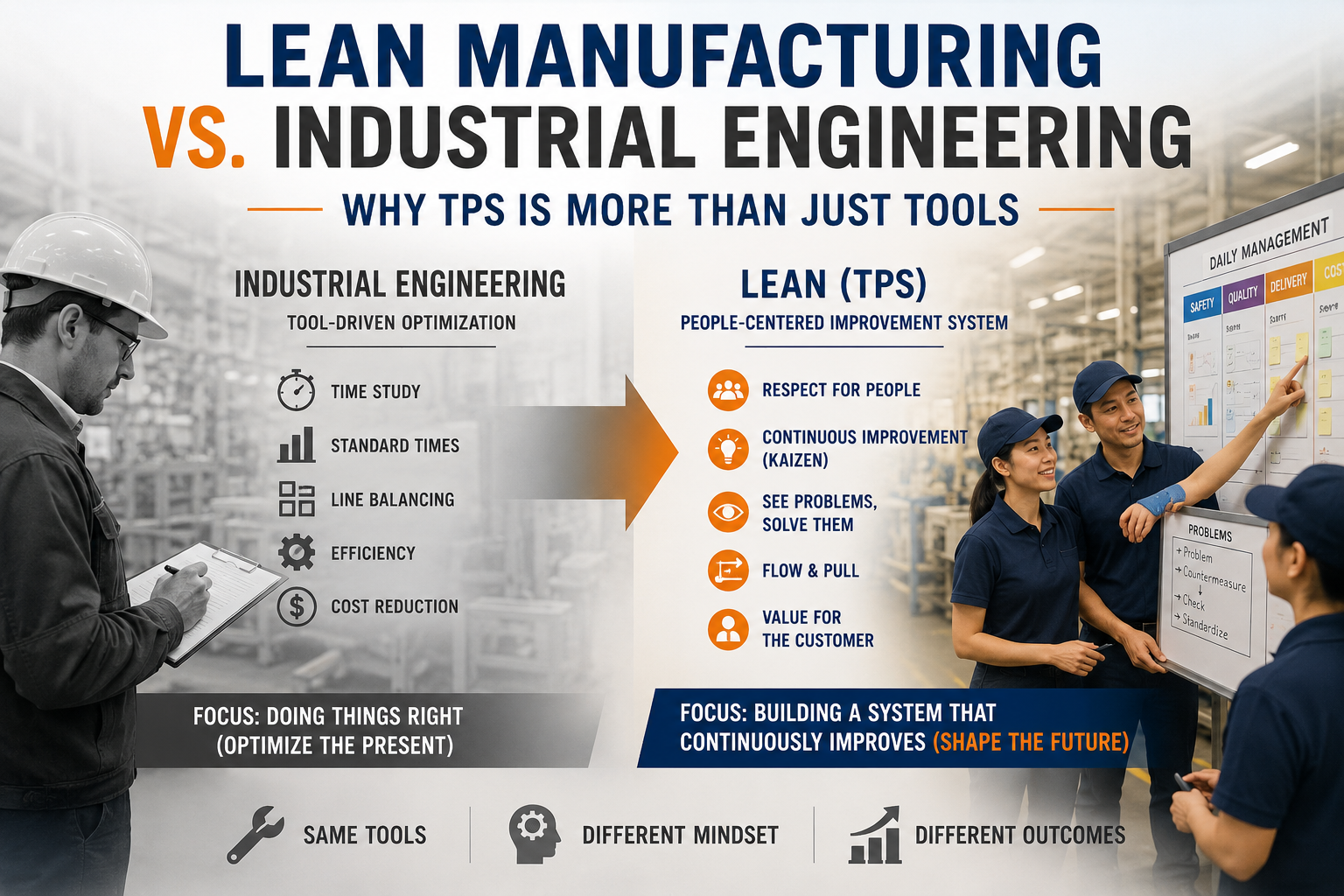
The word ‘lean’ might have become a cliché. Everyone has heard about it, everyone knows it with their perspective. Companies in Europe and America have developed production systems using some twelve to sixteen tools aided by a tool improvement measuring systems. Companies in India exposed to such systems have followed suit in formalising such production systems. Some have tried to use Kobayashi’s 20 Tools and called it lean! Toyota uses more than ninety tools and techniques and that really is the just in time (JIT) basket, there are other things too. How can you expect to replicate Toyota results using a small percentage of Toyota’s JIT basket, and expect change by continuing to do things in the same old ways? There is a connection between different tools and they work in a connected supportive way. If all tools and techniques are not in the repertoire of the user, gaps will show up in the results. How can you expect organisations trying to use a dozen odd tools; struggling to cope with demand changes; unable to build lean thinking alongwith necessary routines and behavior changes; ever replicate lean results like Toyota or Mysore Kirloskar? Tools alone will not make a company lean, we chose appropriate tools to solve problems and not randomly apply them with the expectation to become lean.
**Results you can expect: **
- Cutting down upto 90% of present order to delivery times
- Reduction in lead times by upto 90%
- Cutting down inventory by 75 - 90%
- Performing at above 99% on-time delivery
- Quality improvement above 95-99% of current levels
- Reducing floor space usage by 30 - 50%
- Cost reduction upto 60%
- Reduction in number of vendors – upto 80%
- Increased market share to dominance – upto 85%
- Permanent price reduction to customer (not discount) (30% has been demonstrated)
- Upping the profitability by many times
- No significant addition in manpower, surplus could be redeployed in growth areas.
- Profitability becomes independent of the economic situation
- High level of motivation among all stakeholders and a motivated environment.
- Continuous learning culture
- And much more … read the case study
**Few Benchmarks from Mysore Kirloskar case: **
- New product development – Drawing Board to Market; almost 30 Machine models in One Hundred days only (without CAD, CAM)!
- Permanent price reduction to customer for the same machine specifications as before – 30 percent downward revision. Not a discount
- Overall cost reduction through productivity improvement – 60 percent.
- Five hundred percent revenue growth in three years, during which time eighty three percent of vendors reduced, and manpower rightsized downward by twenty five percent (Productivity improvement)
- No borrowings for the operation of the factory.
- Vendors were paid within a week from delivery and acceptance.
- ERE brought down to one fourth of its original percentage in three years.
- Inventory turns improved over twelve times in three years making it the industry’s envy and new standard.
- Customer satisfaction was nearly one hundred percent.
- And for many more - read the case study
Download the original PDF Cracking-the-lean-code.pdf
Download PDF ↓ Keep reading
More on Lean Manufacturing
ARTICLE
Lean Manufacturing vs. Industrial Engineering: Why TPS Is More Than a Toolkit
Lean ManufacturingMay 2026