
CASE STUDY
A Machine Builder
Case Studies & InterviewsSep 2026
“I am sinking.” Shop-floor teaching cut supply chain lead times 84–92%, build times 66%, throughput 92% — and made the company profitable within months.
Four decades of writing and teaching, in one place — the thinking behind the transformations, not just the results. Every piece is readable here; the original PDFs are a click away.
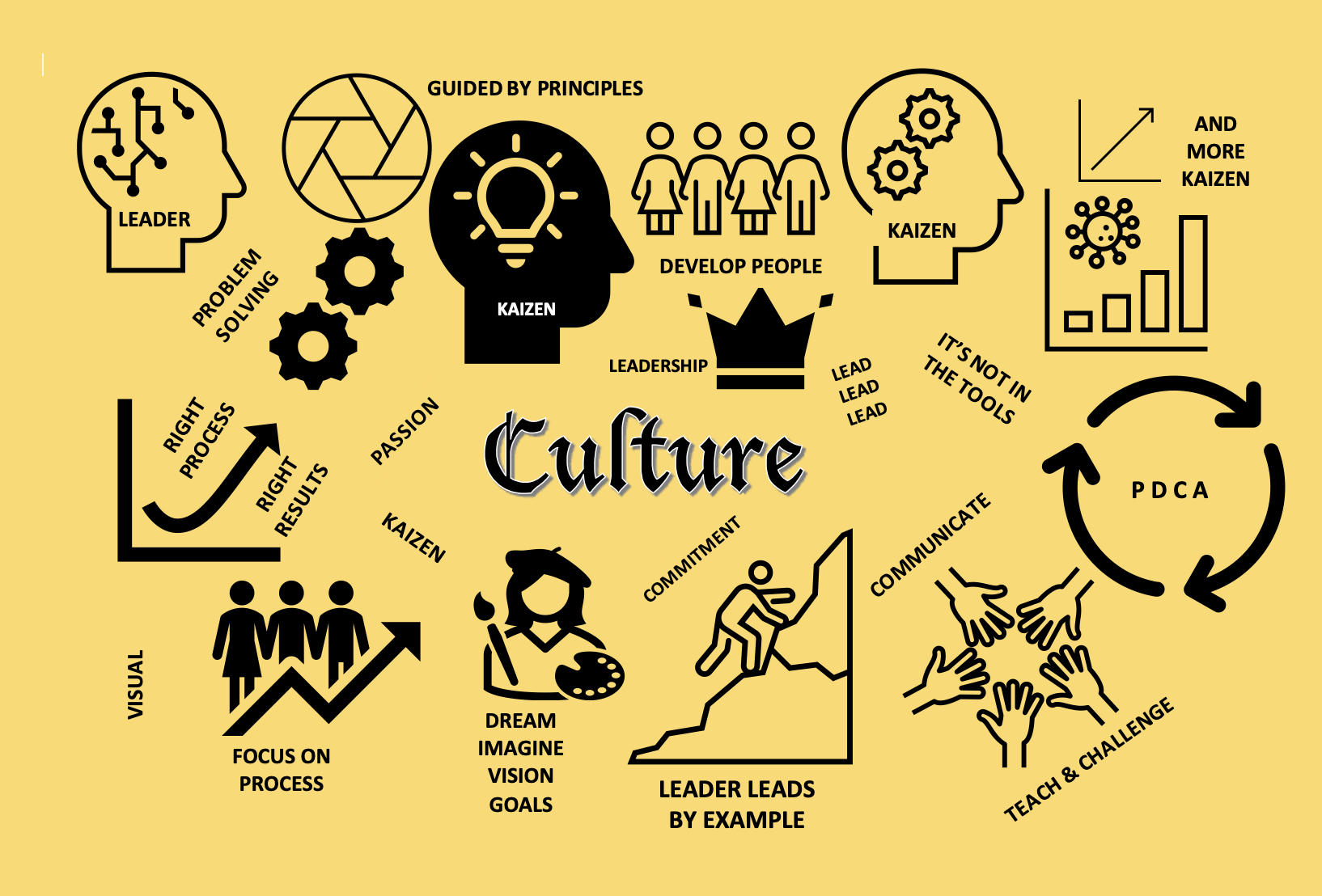
I have often been asked, “How did you build the Lean culture in the companies you transformed”? In this article I will share with you some important things that helped me build the Lean culture .. Some define company…
Anonymized, first-hand accounts — the situation on arrival, what was taught on the floor, and what changed.
“I am sinking.” Shop-floor teaching cut supply chain lead times 84–92%, build times 66%, throughput 92% — and made the company profitable within months.
The plant looked more like a warehouse than a factory. It came down to three days of raw material inventory — and revenue went up.
Five years old and never once profitable. A lean operating system built from the floor up made it operationally profitable in the eighth month.
An MSME cluster rebuilt around takt time and daily shipment — and still above water when its customers' demand collapsed.
“I am sinking.” Shop-floor teaching cut supply chain lead times 84–92%, build times 66%, throughput 92% — and made the company profitable within months.
The plant looked more like a warehouse than a factory. It came down to three days of raw material inventory — and revenue went up.
Five years old and never once profitable. A lean operating system built from the floor up made it operationally profitable in the eighth month.
An MSME cluster rebuilt around takt time and daily shipment — and still above water when its customers' demand collapsed.

VALUES OF GOOD THINKING Philosopher Benjamin Disraeli, once said "Nurture great thoughts, for you will never go higher than your thoughts". Look at all the successful people in the world, what do…
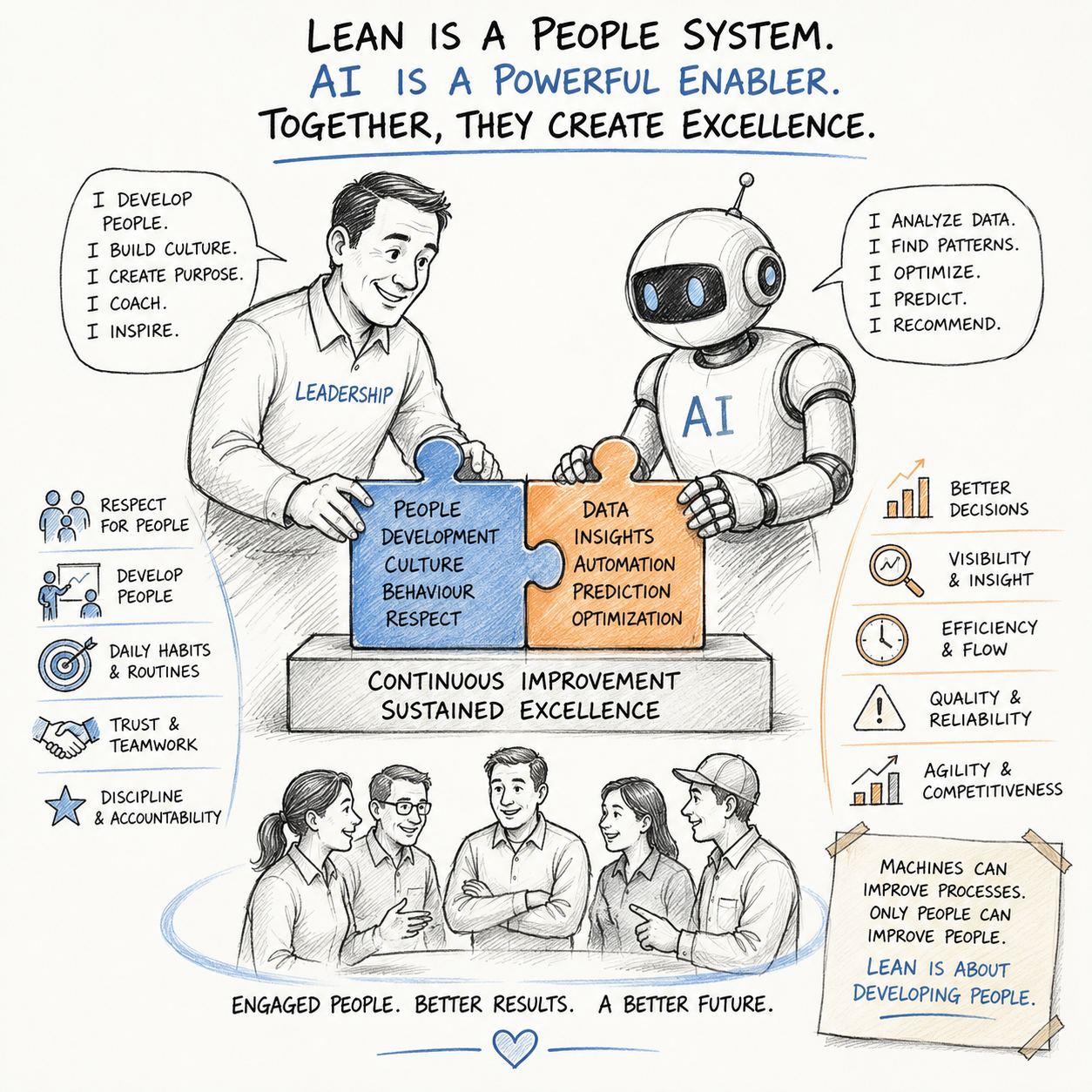
AI can enhance Lean tools and analytics, but leadership, culture and people development remain fundamentally human responsibilities. Lean is not primarily a problem-solving system — it is a people-development system.
More than an efficiency tool, Total Lean is an enterprise-wide strategy that builds lasting advantage through continuous improvement, innovation and customer value.
Organisations can achieve manufacturing excellence by changing how they think about leadership, processes, waste, quality and continuous improvement.
Lean manufacturing succeeds when every employee owns both execution and continuous improvement, eliminating waste through standards, problem-solving, and kaizen culture. The root cause of failure: jobs are not defined to include continuous improvement and human development.

“Lean” has become a cliché’, one of the most discussed and misinterpreted concepts in modern management. It is…

Lean is not just a way to run a business better, but a way to win differently — and keep winning. True Lean elevates itself from an…
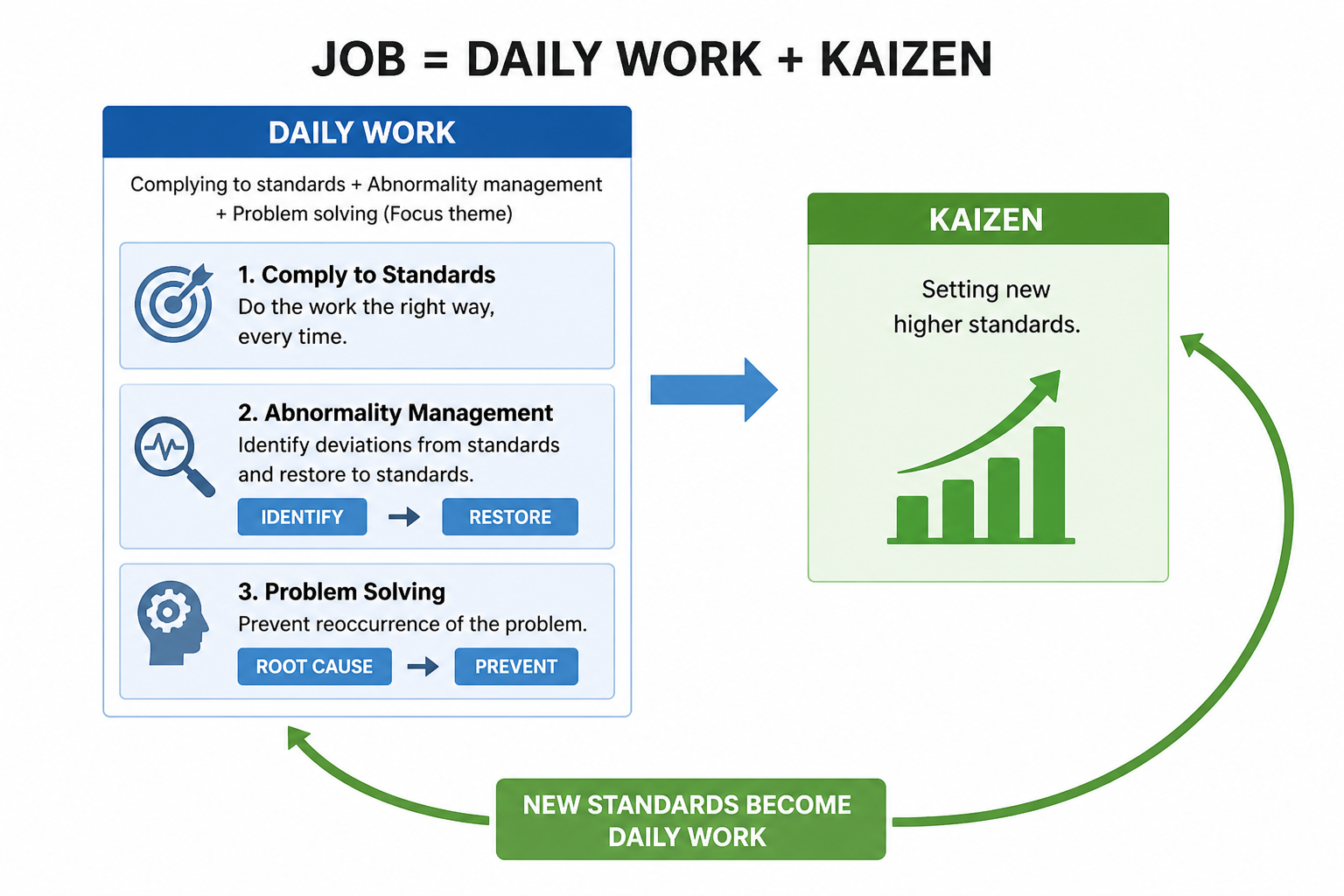
In lean manufacturing, a “job” is not merely the execution of assigned…

VALUES OF GOOD THINKING Philosopher Benjamin Disraeli, once said "Nurture great…

The word sensei is often translated simply as "teacher." But does this definition fully capture what a sensei truly represents? In the context…
A sensei teaches more than information, surpassing other teachers. What the word really means in the context of lean transformation.
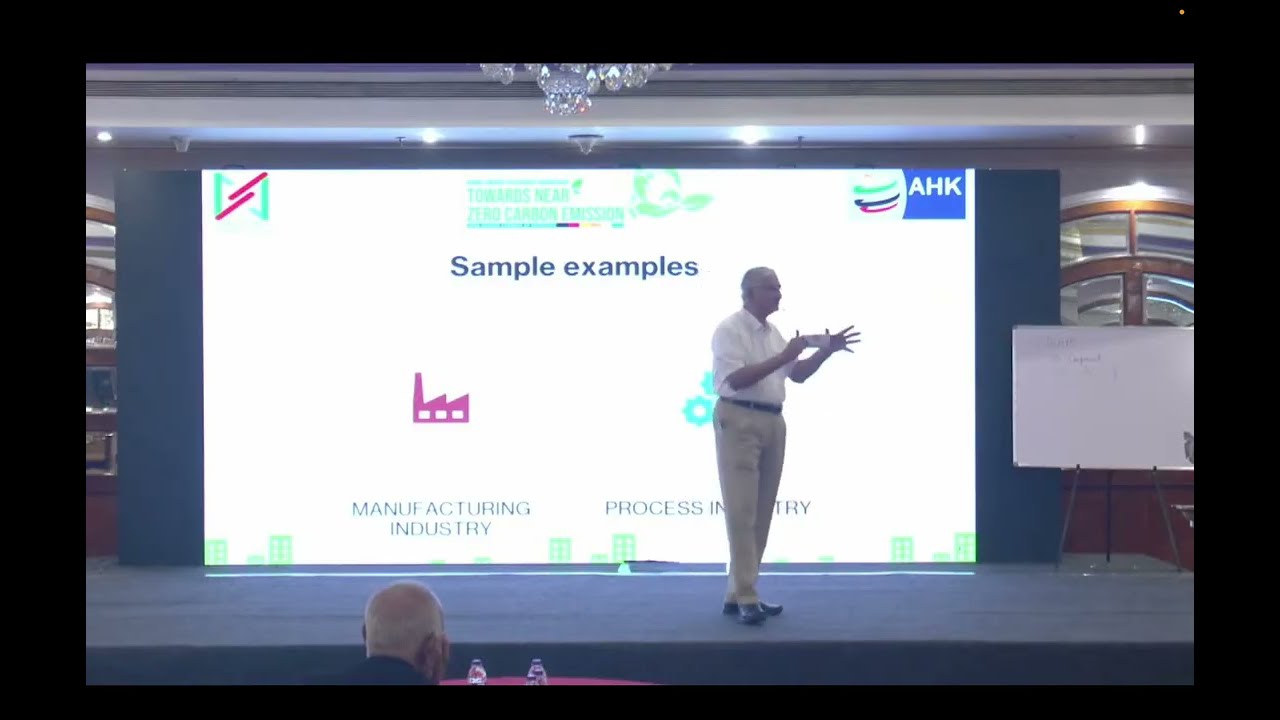 ►
► A conference talk for IGCC and FEMA on energy efficiency and conservation in manufacturing.
A remarkable machine tool factory where workers handled machining, assembly, quality control and inventory alike. Why lean production is a high-risk, high-return venture.
Just-in-Time high returns, or Just-in-Case low returns? Why should the product alone be a differentiator when the process can build advantage?
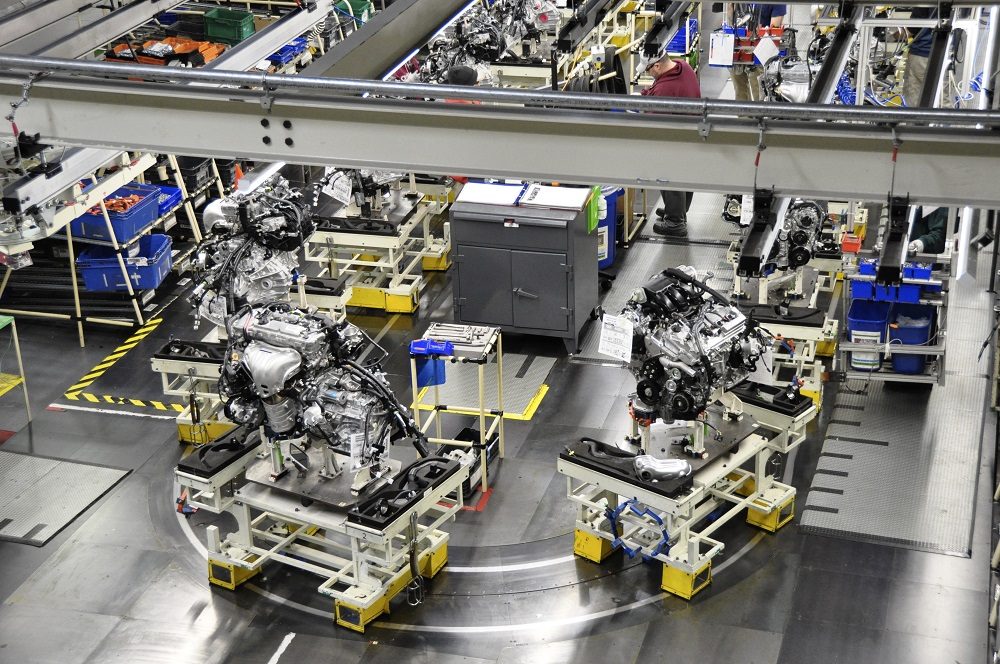
What is your philosophy? A Just in Time ‘high returns’ or a Just in Case ‘low returns’? Why should the product alone be a differentiator when process can build strong competitive advantage? Wouldn’t you want a…
A turnaround is a change of mind before it is a change of numbers. On leading recovery with a lean mindset.
A successful culture is one everyone can embrace, from the newest employee to the highest-ranking official. Tried-and-tested ways to build a thriving lean culture.

It was with great optimism and expectations that Bridgeport USA and Texmaco Indonesia came together to set up a joint venture for CNC and conventional machine tools, but sometimes, even the best laid plans can go awry,…
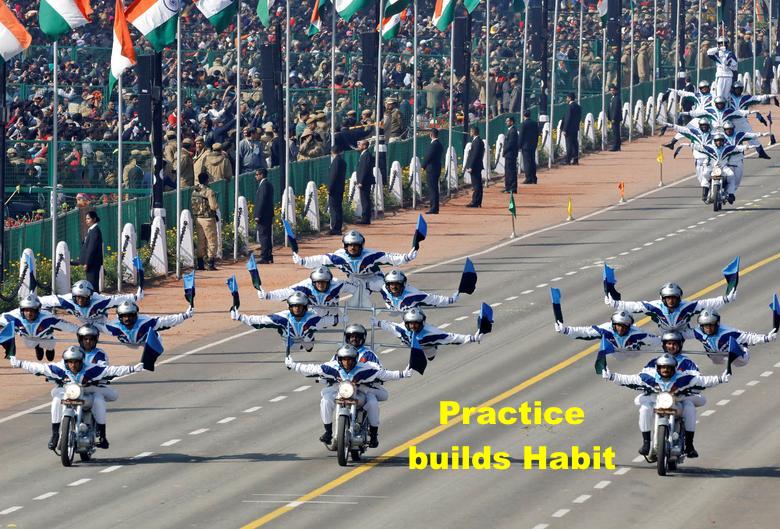
‘Lean’ for any business process has become so very famous for the benefits it brings to the customer, desired by most CEO’s, celebrated by a successful few, envy of the vain, evaded by the skeptics. Simple though, it…
Building a lean culture is about developing the competence and behaviour in people to see waste, solve problems, and make improvements.
I have often been asked, “How did you build the Lean culture in the companies you transformed”? In this article I will share with you some important things that helped me build the Lean culture .. Some define company…

Changing the behavior of individuals is one of the greatest challenges in a business and in society as well. Recently we introduced our methodology on how to implement Lean within a municipality. We were then asked by…
Sanjeev joins the WBSRocks podcast to explain why most companies fail at Lean — they buy the tools and skip the strategy — and what a manufacturer has to change in its thinking before the shop floor can change.
The full account of a comprehensive lean transformation in Indian manufacturing, from first principles through to sustained results.
An in-depth account of turning around a struggling manufacturing business, and the thinking that made recovery possible.
 ►
► A Swedish-language interview — three questions on Lean put to Sanjeev Baitmangalkar, covering what Lean asks of an organisation and where transformations typically go wrong.

Finishing work with a client, my associate and I were driving down to deliver a talk at a Technical University. Sighting a roadside fruit vendor, and on a hunch, we stopped to pick up some fruits. At the institution,…
Excellence is not a destination reached by installing tools. On where it actually lies, and what it asks of an organisation.
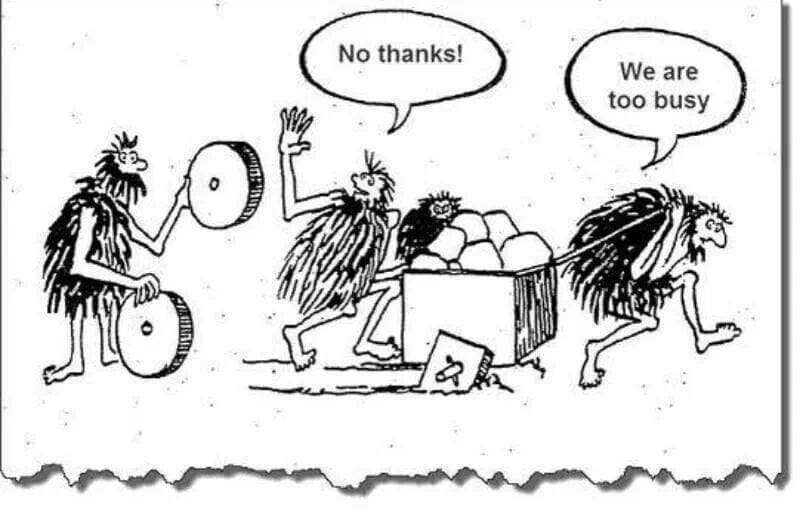
It is four decades since University Professors and Researchers have been studying Toyota and trying to understand what they do and how. Toyota was the mother of ‘Efficiency Innovation’ yet contributing to economy,…

Managements believe that people’s talents are what turns them into worldclass performers. But, in fact, talent has virtually nothing to do with performance. True worldclass performance is built over a long period of…
Value Stream Mapping is widely treated as the central tool for detecting waste — but VSM was never designed to address problems at a detailed level.
Four decades of professors and consultants have studied Toyota, trying to comprehend how and what it does. On strategic solutions and real competitive advantage.
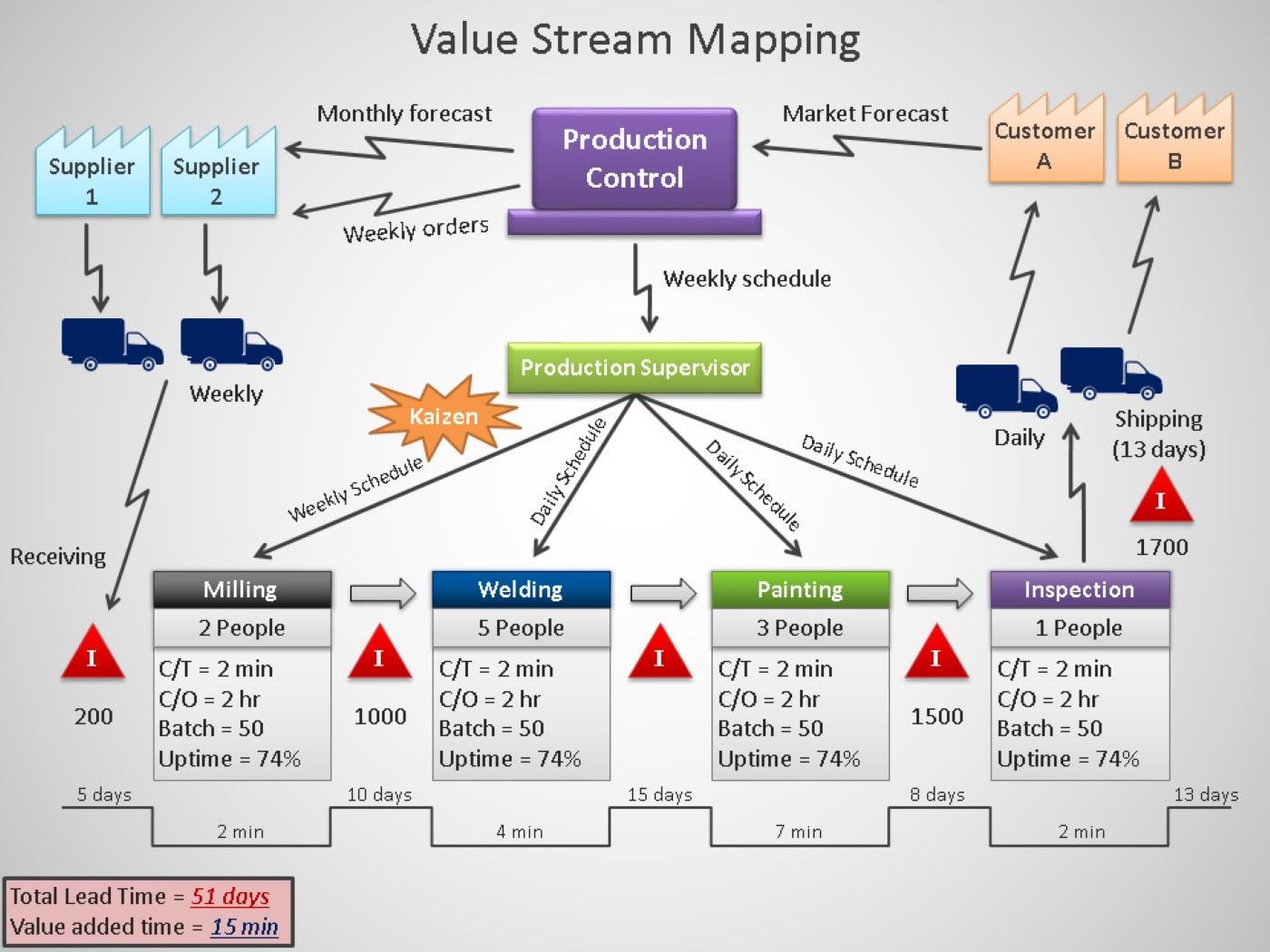
Leading India’s first total lean enterprise transformation back in the early 1990’s we often huddled on the shop floor to discuss layout changes to improve flow and pace production while answering variable demand…
Lean manufacturing has long been proven, yet common sense still eludes much of discrete manufacturing. On why the obvious remains so hard to adopt.
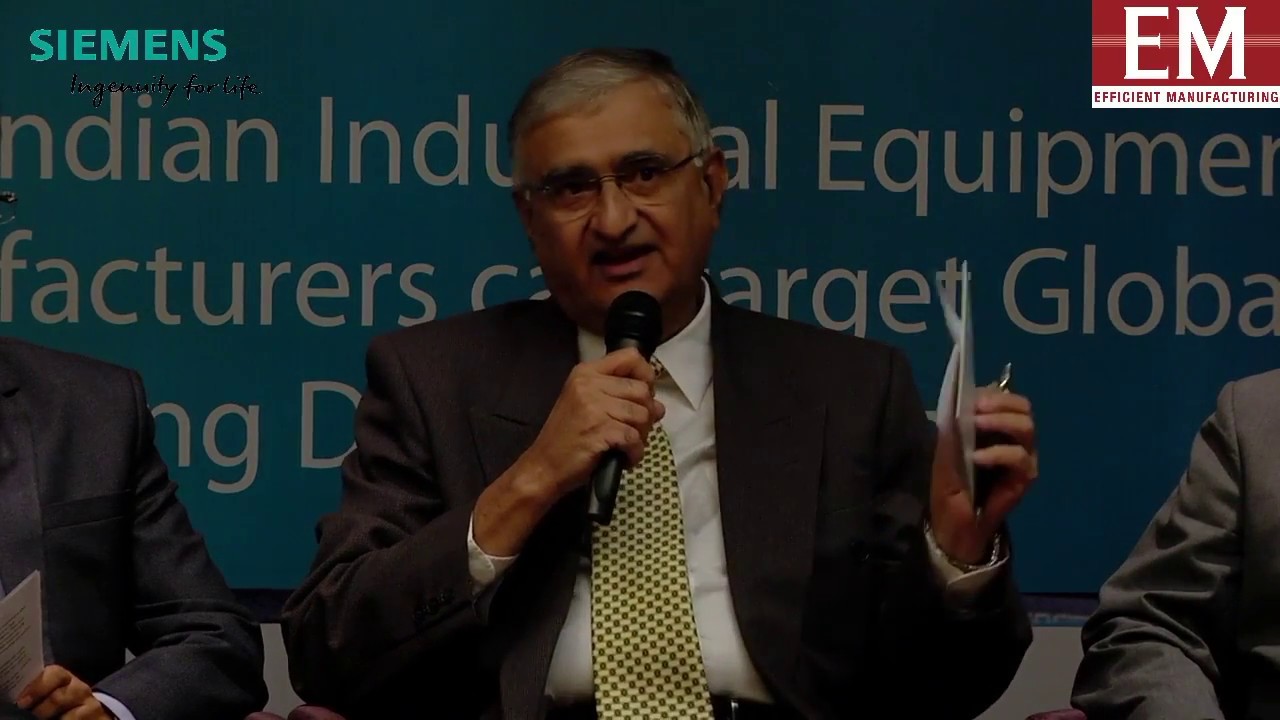 ►
► On digitalisation as a competitive lever — what it can and cannot do for a manufacturer competing in global markets.

Give Lean implementation the status of your company’s number one strategic intent, lead it from the top and see it succeed! A CEO with deep commitment to lean thinking and lean practice stands the best chance of leading…

Indian manufacturing organisations should aspire to build the brand tag ‘Made in India’ as a value offering. This will mean building core competence values like reliability, safety, value for money, dependability, and…
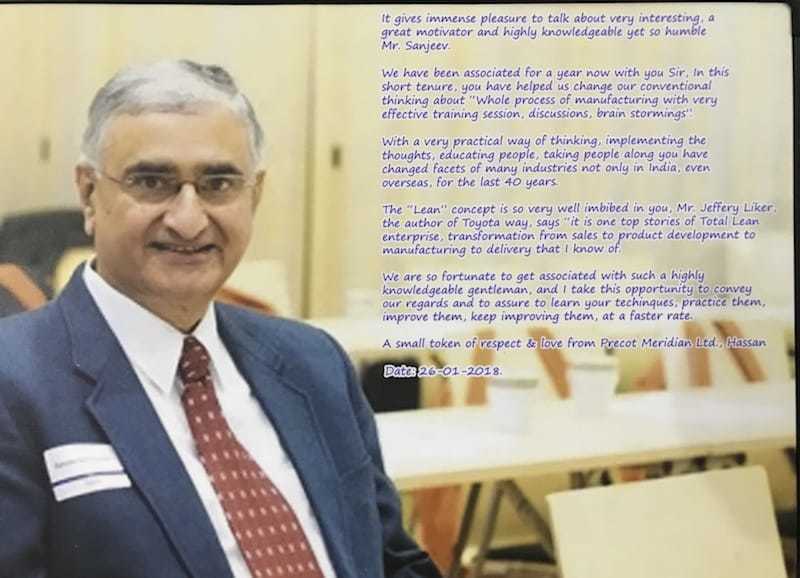
I could say 'another testimonial' (zoom to read), but the thing that makes this special is it was given to me on 26th January the day when the highest gallantry award winners receive their citations from the President…

Once the Sales Manager had converted the customer order into a Visual Signaling Card at Mysore Kirloskar Hubli factory and placed it in its location on the assembly line, the entire execution thereafter was completely…
 ►
► On innovation that creates growth rather than only efficiency, and what it takes for a manufacturing business to pursue it.
 ►
► On competitive strategy: how operational capability built on the shop floor becomes a position in the market that rivals find hard to copy.
 ►
► On the leadership behind a successful business — the strategies that separate organisations that sustain results from those that do not.
 ►
► On disruptive innovation — how established manufacturers get displaced, and what operational thinking has to do with staying ahead of it.
 ►
► Applying Lean and value stream thinking beyond the factory walls, to the supply chain and logistics problems that flow through it.
 ►
► Why so many companies copy Toyota's tools and never get Toyota's results — the difference between adopting practices and building the system underneath them.
 ►
► Lean is not a programme to install but a journey to design. On setting the direction, sequence and pace that fit your own organisation rather than copying someone else's.
 ►
► What an organisation actually needs in place to become Lean — beyond the tools, the conditions that decide whether a transformation holds.
 ►
► The story of a Lean transformation — what the organisation looked like on arrival, what changed on the shop floor, and what that made possible.
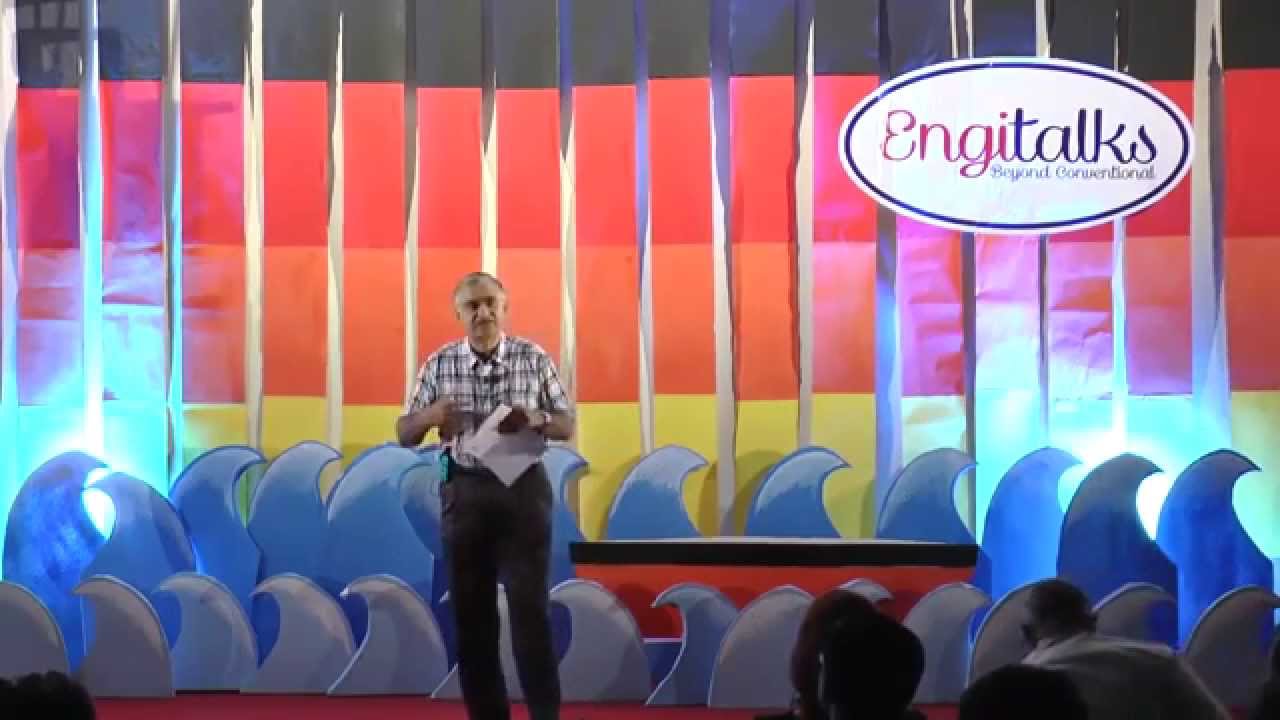 ►
► An introduction to Lean manufacturing from Sanjeev Baitmangalkar — what it is, what it is not, and what it asks of the people running the factory.

Eighteen years ago I had the most enviable job. Yes! Back then many people wanted my job because it had everything that anyone in a job would want (except my salary) – success, rich cash flow, profitable, successful JIT…
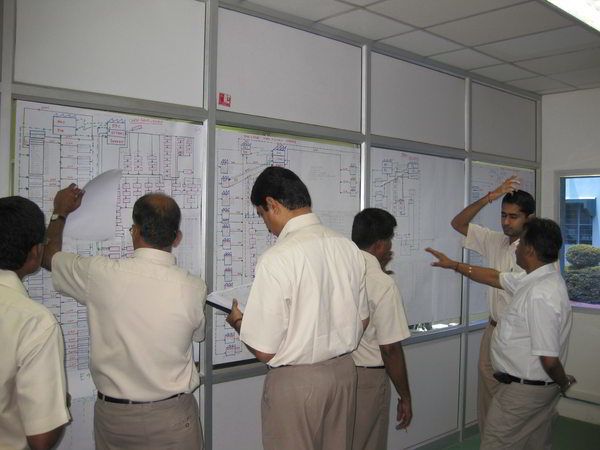
Does VSM (Value Stream Map) maximise profitability? If it did, would that be the only lean tool most companies would use? Have those organisations that have used the VSM tool maximised their profits? Are there factors…
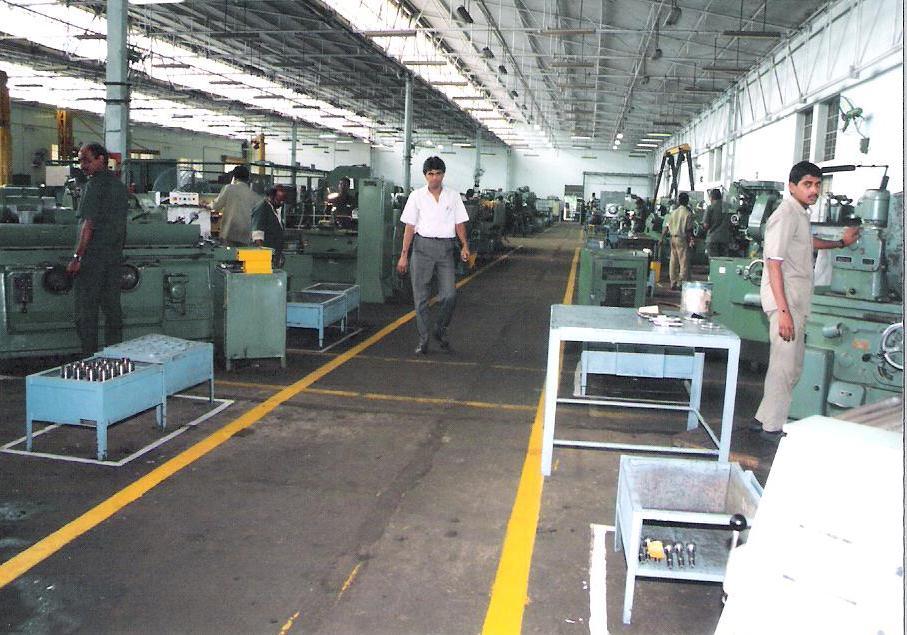
Organising the workplace (or Workplace Organisation 5S) and maintaining it the way it should be, is a good work culture. Why then do we see variations? A good culture strives to improvise; a bad one creates…
If owners fail to back their managers' bona fide decisions, that is an ethical deficit. A case study of how collateral objectives sabotaged a joint venture that had finally found its formula to succeed.
What were the ingredients that made some of the greatest leaders of all time? Real-life examples establishing character as a true leader's most important asset.
Teamwork is the key to successful organisations, and genuine teamwork stands on five pillars. The first is trust — without it, there is no teamwork at all.
An open mind is your doorway to success; a closed one spells doom. When you think you have exhausted all possibilities — you haven't.
Do you look out for opportunity, or wait for it to come to you? As Lee Iacocca said, even the right decision is the wrong decision if it is made too late.
People look to education, intelligence and credentials to explain success. What actually makes the difference, more than anything else, is passion.
Success means different things to different people. It is noblest when it leaves you with the self-respect of being proud of who you have become.
A leader's ability is gauged by how they solve problems. On imbibing that quality — drawn from the life of Sam Walton, the man who started Wal-Mart.
The ear of the leader must ring with the voices of the people, said Woodrow Wilson. On the discipline of actually listening.
Successful people build relationships that last, and building them requires building trust. The best business relationships work when everyone has an investment in making things happen.
Teachability is the quality that makes one continually strive to grow, learn and improve. Charles Chaplin, who applied no shortcuts, remains the example.
For decades industry has forecast production and wondered why it is left holding unused inventory. If you need different results, you need to change your habits.
Leadership is the art of accomplishing more than the science of management says is possible. From Gandhi to Obama — what human qualities does it take?
Commitment begins in the heart, and it precedes achievement — you achieve only after you commit. Second in the series on leadership.
Where trust exists in a team, members do not fear passionate debate. Failure to build trust breeds a fear of conflict that quietly damages the team.
Bengaluru's unplanned decade of growth brought chaos and congestion along with prosperity. On the attitudes that drive success beyond money alone.
One basic principle great leaders practise: to get ahead, put others ahead first. On servanthood, and why it is critical to leadership.
High self-esteem is the hallmark of good leaders, and it comes from quality thinking that has produced positive results. On building genuine self-confidence.
A thousand-piece jigsaw has every resource needed to finish it, but you begin by studying the picture on the box. On commitment, and what its absence costs a team.
Communication is what we say and how we say it, and direct communication is the best form. A good leader has the keys to stir the soul.
Commitment is the language of the wise; complaint is that of fools. On accountability — and the human tendency to avoid it.
Courage is the ability to face fear, uncertainty and the unknown; competence is the ability to see the other side. Both are essential qualities of a leader.
Discernment is the ability to find the root of a matter, and it relies on both intuition and reason. On seeing what others miss.
The results an organisation wants are the goals it set at the beginning — yet inattention to results is the norm. On paying attention to what actually gets achieved.
Learning to focus may be the best investment you can make in yourself, and it is among the most overlooked areas of self-improvement.
The successful are governed by the thoughts of their best hour and greatest optimism; the unsuccessful are controlled by past failures and doubts.
Real generosity is doing something for someone who will never find out. The selfless act of giving frees us from the familiar territory of our own needs.
Core competencies are the capabilities underlying leadership in a range of products or services, enabling a company to deliver a fundamental customer benefit.
Cost reduction is hard for a company whose people are not used to working as a motivated team. A lesson first learnt at Maruti.
Machine builders face rising costs, shorter order-to-delivery demands and constant changes in scope mid-execution. On attenuating throughput times.
It is people, their routines, leadership, vision and culture that separate true lean companies from the ordinary — the answer lies beyond tools.
The success of any organisation depends on its culture and leadership. If either is strong it will survive; if both are strong it will soar.
Every individual reaches a point of feeling stagnated and drained of good ideas. On the change in thinking needed at every stage of life.
A leader's role is the most critical element in an organisation's transition. What differentiates a manager from a leader is the willingness to lead.
Lean manufacturing makes manufacturers nimble, reacting quickly to demand with minimum inventory. Does it merit your consideration?
Change your thinking and you change your feelings; change your feelings and you change your actions. There is little difference in people, but attitude is that little difference.
Disruption, disruptive technologies, disruptive innovation — the race seems unending. Disruptions drive growth, but are we doing enough to create jobs?
An interview on the breakthrough technologies and management ideas reshaping manufacturing — and why it is never too late to embrace lean and blunt the impact of economic swings.
Lean manufacturing lets manufacturers react quickly to changes in customer demand while holding little inventory. Is it good for your organisation? An examination of the case.
Manufacturers worldwide are adopting new strategies to reach their customers. On industrial marketing: analysing market potential and selecting the right medium.
The concluding part on industrial marketing techniques, highlighting a few 'marketing sins' committed inside organisations as competition heats up.
The core competence theory of Hamel and Prahalad is not a panacea. There aren't simple answers to many questions, but those who figure it out emerge winners.
Extra work on products or services leads to customer dissatisfaction in the long run. Recognising these forms of waste, and taking corrective measures.
Author: Pradip A. P. Da’Costa, Director, Astra Metal Systems Pvt. Ltd. and Vice President, Verna Industrial Association, Verna Goa. A few years ago…
Lean has become one of the best competitive strategies of the century. But is implementing it as simple as many companies think?
Lean manufacturing is widely admired and widely attempted. On why genuine, lasting successes remain the exception.
When your only tool is a hammer, every problem looks like a nail. Two basic rules in business: never lose money, and never forget rule number one.
Lean or Six Sigma — which should you choose, and on what basis? On telling the two apart and knowing what each is actually for.
Lean is only as good as your weakest link. On extending lean thinking across the supply chain rather than stopping at the factory gate.
Many companies adopt lean tools and still struggle. On why some find lean hard, and what separates them from those who succeed.
On the relationship between lean and Six Sigma, and the change in culture and strategy that either one actually demands.
Lean manufacturing allows manufacturers to be fast and nimble enough to react quickly to changes in customer demand, and to do it with little inventory.
Process improvement is a way of life for successful manufacturers. On the purpose and methods of linking lean initiatives into the manufacturing set-up.
Despite its infrastructure woes, India has wooed investors as a low-cost option. On the strategies to sustain that momentum and stay profitable.
The value a manufacturer offers now matters more than the lowest price. Today's customers demand short lead times, quality, on-time delivery and good service.
Lessons drawn from lean transformations across Indian manufacturing — what transferred, what did not, and why.
Lessons from Detroit and the NUMMI experiment on what separates efficient manufacturing from the rest.
Call it the fall of a giant or the result of an attitude: the closure of General Motors in its present form holds many lessons. Why did the big giant fall?
Seeing differently comes before being different. On the shift in perception that has to precede any real change in an organisation.
The new game is speed, flexibility and self-renewal. On building strategic advantage through human resources in a knowledge-driven economy.
Change occurs whether we want it or not, or are prepared for it or not. It happens without our involvement — but our involvement is what makes it benefit us.
Thinking lean isn't just about costs; it's about customers. Once manufacturing is centred on customer needs, quality follows automatically.
Reports of millions of jobs culled sank hearts and spread gloom. On why the response to a downturn should still be to think growth.
A tribute to the late Air Cmde K. D. Singh, the first Principal of Sainik School Bijapur, and what his leadership taught those who served under him.
Bridgeport USA and Texmaco South East Asia formed a joint venture with high hopes, and the best-laid plans went awry. How lean practices produced a complete turnaround.
Becoming a better thinker is worth the effort, because the way you think impacts every aspect of your life — whoever and whatever you are.
Rather than getting stuck in aggregated processes, look at the broad principles that move a batch or mass-production organisation towards lean.
Mysore Kirloskar Hubli was the first comprehensive lean transformation in India, making a long-term decision to move from batch production to Just-in-Time.
From hundreds of companies trained and advised: why do most never succeed in becoming true lean enterprises, despite passionate managers?
Gone are the days when companies could stockpile raw materials and stack up finished goods. So why are lean successes still so rare?
Where re-engineering happens within a company's walls, X-engineering works across the boundaries between a company and its customers, partners and suppliers.
Bangalore, India and Portland, OR, USA — open to America, India, Asia, and Europe.