
ARTICLE
The Lean Definition of a JOB

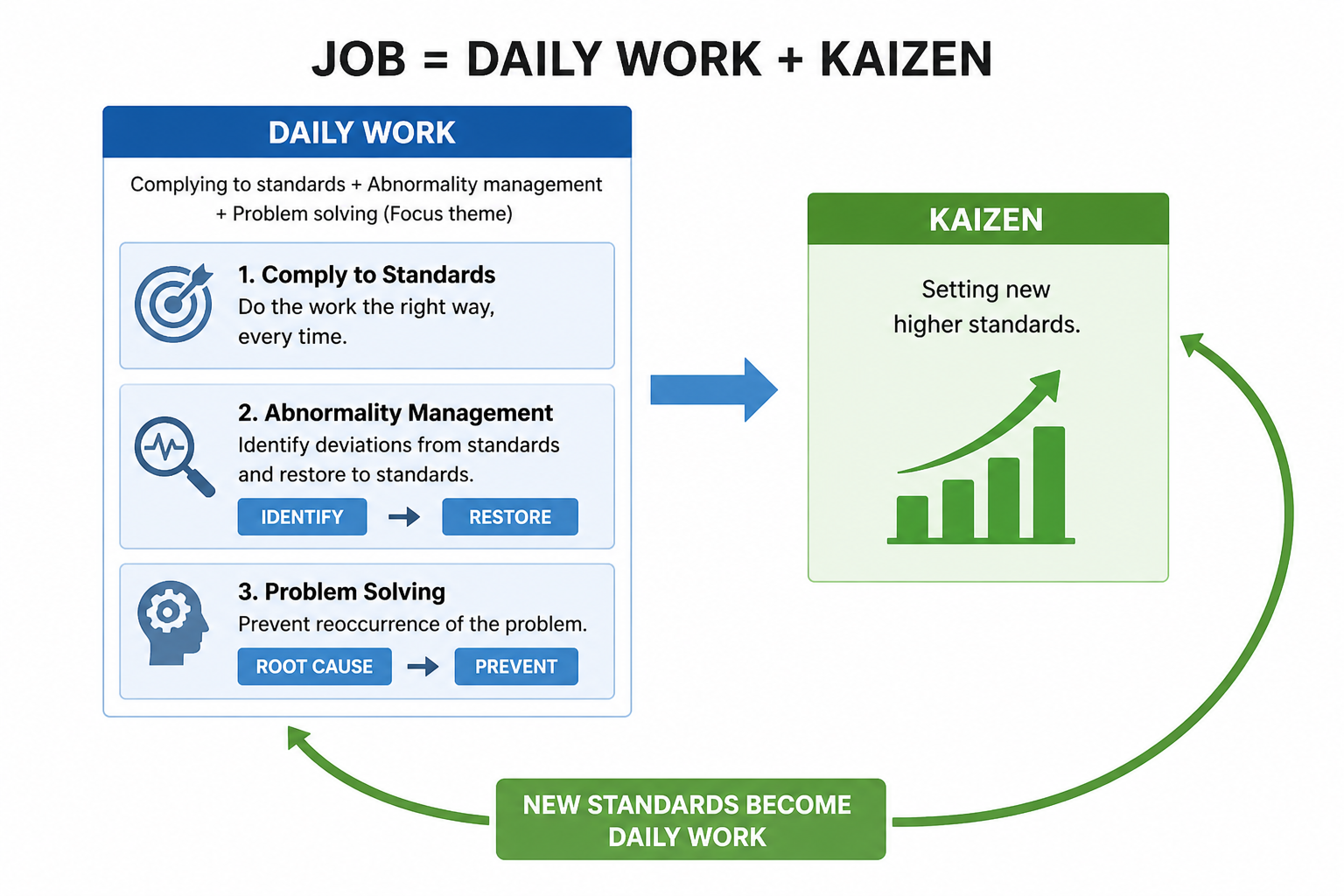
In lean manufacturing, a “job” is not merely the execution of assigned tasks—it is a disciplined combination of daily work and continuous improvement (kaizen). This dual responsibility ensures that performance is both stable in the present and progressively better in the future.
Daily work forms the foundation. It begins with strict compliance to standards, which represent the best-known way to perform a task. Without adherence, consistency and quality cannot be sustained. However, lean recognises that deviations can happen. This is where abnormality management becomes critical: identifying deviations from standards as they occur and restoring conditions back to normal quickly. The aim is not to tolerate variation but to make it visible and correct it immediately.
Extreme importance is given to problem solving, the central focus of daily work. While abnormality management restores the status quo, problem solving goes deeper—it seeks to eliminate root causes so that the same issue does not recur. This shifts the organisation from reactive firefighting to proactive learning.
Overlaying daily work is kaizen, the continuous pursuit of improvement. Kaizen is not an occasional activity but an integral part of every job. It involves setting new, higher standards once current ones are stabilised. Each improvement becomes the new baseline, creating a cycle of ongoing progress.
Thus, in lean manufacturing, a job is a dynamic construct: maintain standards today, solve problems to secure tomorrow, and continuously raise the bar for the future.
Keep reading
More on Lean Manufacturing
ARTICLE
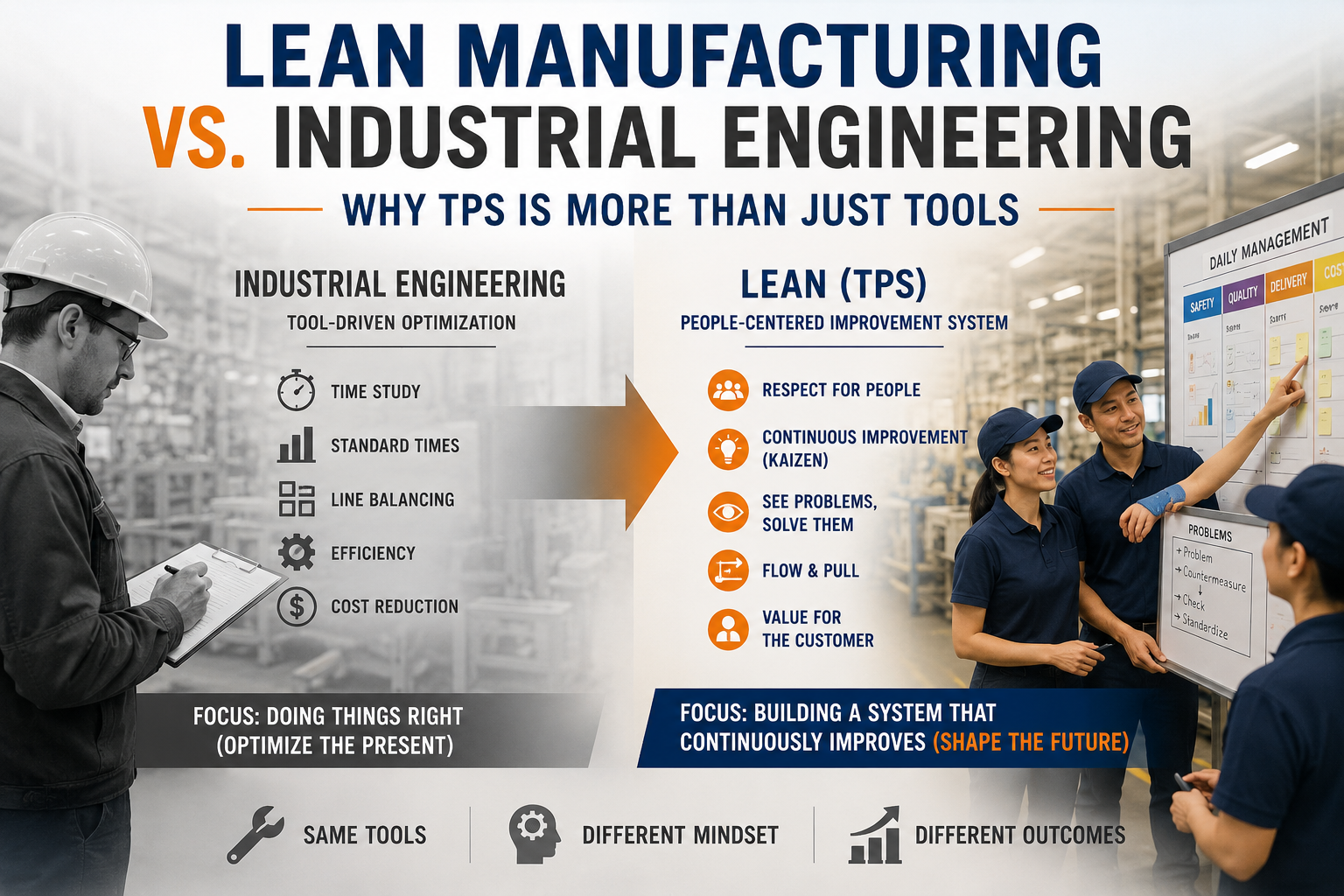
Lean Manufacturing vs. Industrial Engineering: Why TPS Is More Than a Toolkit
Lean ManufacturingMay 2026