
ARTICLE
‘Just in Time’ Vs ‘Just in Case’
What is your philosophy? A Just in Time ‘high returns’ or a Just in Case ‘low returns’? Why should the product alone be a differentiator when process can build strong competitive advantage? Wouldn’t you want a competitive strategy that leapfrogs you ahead of competition? It is not competence but fear that withholds people from leveraging superior principles and philosophies.
In a lesser known part of the world there was a truly remarkable machine tool factory. The workers not only performed the machining and assembly tasks, but also quality control, inventory management, pulling material from external vendors and internal suppliers, identifying and solving problems, thereby improving productivity, quality and reducing cost by eliminating wastes. What was remarkable was, once the customer order came in and was recorded, based on the principle of First In First Out (FIFO) the workers controlled all activities until loading the machines on the trucks with little or no intervention from the supervision or management staff, like a ‘human automated factory in motion’! The teams were autonomous, did not require white collar staff and were capable of reacting to shifts in production content. That is the gold standard today for manufacturing. It was this similarity to their system that caught the eyes of Toyota and paved the way for their India entry.
Compared to the manufacturing culture of the time, everything here, was different. The operating principles were pull production, moving inventory, quality controlled by process and not by inspection, production plan done by customer and not PPC department, stop the process when a defect surfaces to eradicate it, develop people who will be able to identify wastes, solve problems and eliminate them. Many companies of that time visited us to study what we were doing and how, some came repeatedly, but success eluded those whose top management did not get involved. IIM Ahmedabad invited Mysore Kirloskar to teach their case in their Operations Management program, and subsequently this case has been used by Universities in different countries, besides becoming a reference for manufacturing industries.
Some production philosophies produce better results than others. There are some links in high productivity, quality and product complexity. High technology is often not a solution for poor performance if technology is employed without suitable production management policies.
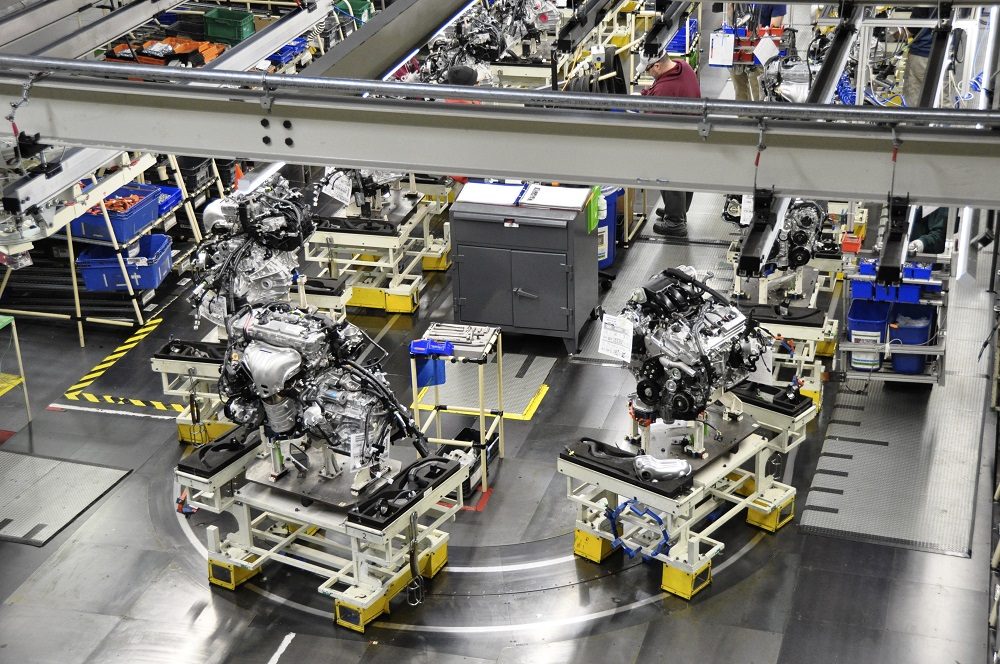
When I ask why do you design a factory with a store? Are you a warehouse or a manufacturing company? They look stunned. Who said that a manufacturing company needs to have a store? The concept of doing everything from huge inventory is an old American concept! Some find it difficult to comprehend the possibility of running a very busy factory without a store or absolutely minimal of it. This is because that thinking is founded on ‘what if something fails’ rather than Poka Yoking or eliminating potential failures which may be harder than status quo. We demonstrated this possibility in a tier one company where they eliminated few months of inventory and replaced it with a daily moving requirement, and when the vehicle business was low they came out with flying colours. Like the saying goes, ‘shoot at the star, if you miss you’ll still be high’. So, however inordinate it may sound, thinking about and working towards these five good zeros can take you there - accidents, delays in delivery, defects, inventory, and lead times.
The tropical islands of Indonesia are known for synthetic fabric and garments. Textiles being a major export they are little known for engineering goods, let alone machine tools. Bridgeport Perkasa (BPMT) limped for over five years without generating any revenue, neither had they produced a single machine nor had they acquired any customers. When we changed the thinking, in less than six months BPMT was flooded with orders from Europe and Asia thumping out production. A sight that brought the President, Ministers and Ambassadors to see the magical change! When Electronica was in a dire state losing money, a different way of working made their monthly P & L profitable in six months. When the technical textile unit of Precot had not made money for over five years since inception, a different way of working turned their monthly P & L profitable in seven months and put them on a roll. And there are so many such examples, and more who during bad market conditions saved their companies from colouring their P & L red. So what is this thinking that made the big difference? What is this outperforming philosophy?
The Henry Ford era saw manufacturing transition from craftsmanship to mass production. Scientific management became the buzz word where leagues of industrial engineers and foremen broke down tasks into simple elements, removed wasteful motion and set job standards to ever increasing pace of the assembly lines. The byproduct of standardisation was increased efficiency levels. The craftsmen who built automobiles before Ford used both hand and head. The Ford thinking took away the head and it was only hands working like the gear in a machine. The Toyota Production System (TPS) was a great innovator making use of both philosophies - the use of hands and mind of the operator, multiskilling them for an assortment of tasks, standardisation and flow, with the added glue of teamwork to produce astonishing results.
Inventory is one among the many features differentiating efficiency from inefficiency. In a perfect world inventories would ideally be low as it frees up the company’s resources since idling parts and assemblies add zero value. Many factories carry large inventories and will argue to reason the ‘Just In Case’ (JIC) failures such as supply shortages, breakdowns, rejections, strikes etc. We can also call this ‘Buffered Production System’ where one buffers against fears instead of solving problems. They have all eschewed from the ‘Just-in-Time’ (JIT) philosophy and embraced the ‘Just-in-Case’ philosophy. Efficiency is minimizing the time between start and finish of part or product manufacture. Ford is known to have used high inventories, standardised products, huge volumes and vertical integration. Toyota adopted a large scale, highly efficient, constant flow production philosophy. They built a local network of adaptable suppliers and integrated them with the assembly plants and helped them grow to become JIT suppliers. This type of flexibility is today a great competitive advantage to those who master it.
Lean production management philosophy presents some higher risks, as any hiccup will stop production. But the potential gains are stupendous. Thus lean production can be considered a high risk – high return venture. Much of the risk can be mitigated with experience, well trained workforce, responsive suppliers and good product design. A good Sensei can guide where one does not know how. JIT companies Poka Yoke all potential failures with superior systems and deep thinking. The most successful lean companies have all developed these characteristics. The buffered production management or JIC policy is safe bet for steady but ‘unexceptional’ returns. The short term risk may be low but so is the potential for long term gains.
Why is there such a huge difference in the efficiencies between a lean company and a buffered or Just in Case managed company? Lean management system encourages full development and integration of all existing technologies, policies, and human resources in a way that traditional or buffered policies seem to miss. At Mysore Kirloskar we had one person in every cell who had no direct responsibilities but was responsible for activities performed by operators (self-inspectors), audit the quality, perform as a trainer and other specialists. This involvement is key to the integrated, continuous incremental improvement of skills, machines and processes that elevates a lean production system over its buffered counterpart.
Where the desire is; improving enterprise value, high returns, enhancing customer value, low order to delivery times, happy employees, fast responding agile company, delighted customers etc., then lean management or lean manufacturing or Just in time production is the answer to best fulfil such requirements. Think no more, partner with an experienced Sensei who has experience of transformational successes and embark on your journey.
Keep reading
More on Lean Manufacturing
ARTICLE
Lean Manufacturing vs. Industrial Engineering: Why TPS Is More Than a Toolkit
Lean ManufacturingMay 2026