
ARTICLE
Make Lean a Habit
‘Lean’ for any business process has become so very famous for the benefits it brings to the customer, desired by most CEO’s, celebrated by a successful few, envy of the vain, evaded by the skeptics. Simple though, it leaves most bewildered and contempt in their shortcoming to build a lean company. Various surveys have given different success rates. But I think those indicating success rate in single digits are perhaps closer to reality. Why is this so?
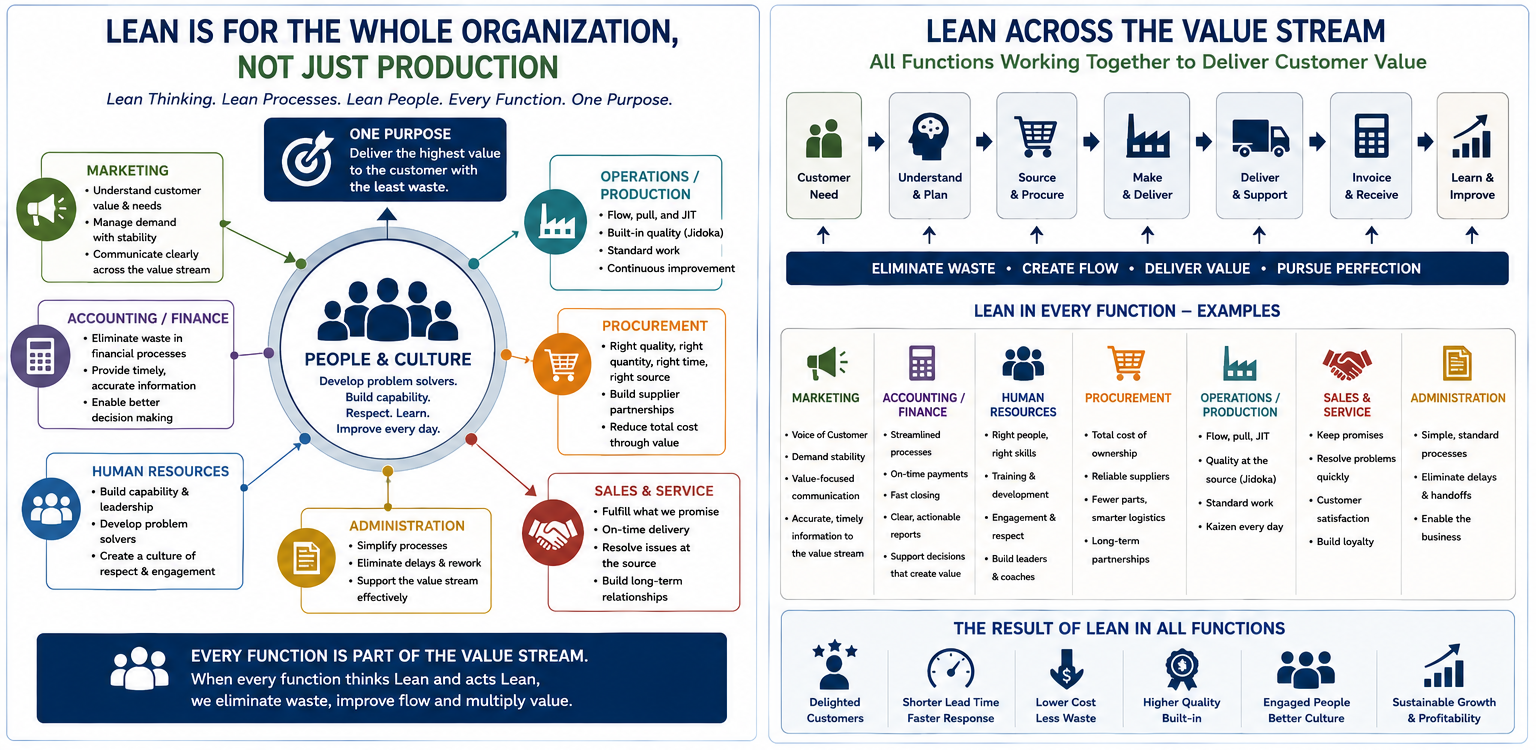
‘Lean’ is being disseminated in many different ways. It has been called by various names such as production system, inventory reduction, continuous improvement, 5S, total productive management (TPM), Kanban system, lean six sigma, waste removal, etc. Such thinking has resulted in trainers and coaches selling the concept in tool modules and not teaching Lean as one seamless entirety focused on operational excellence through human development and transformation, not attaching significant importance to ‘lean application’ in non-production areas such as marketing, accounting, human resource, etc. Such modular thinking gives rise to department structure rather than value streams, delegation and measurement rather than ownership, daily routines that become instructions and not habits practiced and demonstrated, which is patchwork thinking about productivity and quality improvement.
Toyota defines Toyota Production System (TPS) as a production system based on the philosophy of achieving the complete elimination of ALL wastes in pursuit of the most efficient methods. The ALL here includes every area functioning in an organisation from the CEO to the last employee or trainee and not just production. It is Toyota’s production system which is a way of delivering value to customers that is popularly referred to as a ‘lean manufacturing system,’ or a ‘Just-in-Time (JIT) system’. It is the enabler to help keep improving the value delivery to the customer.
This business practice was established based on many years of observation, experimentation and improvements made with the objective of making the products ordered by customers in the quickest and most efficient way, and deliver them as swiftly as possible. TPS was established based on two concepts: “Jidoka” (which can be loosely translated as ‘automation with a human touch’), that is as and when a problem occurs, the equipment or process stops immediately, preventing defective products from being produced; and the ‘Just-in-Time’ concept, in which each process produces only what is needed for the next process to consume in a continuous flow.
Based on the basic philosophies of Jidoka and Just-in-Time, TPS (or lean) can efficiently and quickly produce products of sound quality, one at a time, that fully satisfy customer requirements. TPS (or lean) and its approach to cost reduction are the origins of competitive strength and unique advantages for Toyota or any product maker and service provider. Honing these strengths is critical for gaining competitive advantage or ones future survival. One must use these initiatives and develop their human resources to make ever-better products that will be appreciated by customers. Among the reasons why many remain peeved or fail with ‘lean’ is the miscommunication of what is lean and how to imbibe and implement it. The tool teachers focus on the mechanistic measurements in production area rather than the social process across all functions which is more essential. JIT manufacturing significantly improves productivity for it is centered on the principle of making only what is needed, when it is needed and in the exact amount needed.
Marketing
Traditional practice is that marketing department makes a forecast at the beginning of the year, then changes it every quarter, every month and from what I have seen some even few times in the month or week. This could be due to either bad forecasting or market volatility. Markets are neither constant nor will behave to any exact pattern. Call this variation in customer pull. Now the key question, how is one going to match their manufacturing in response to these variations without wasting any resources? Over many decades traditional manufacturing has tried to do it with stored inventory making the organisation heavy, slow, inefficient and unsuccessful. Whereas ‘Lean’ or JIT manufacturing enables you to do it efficiently and successfully; yet not permitting you to buy material without an order, and one can only buy it in unison with production schedule and flow of final product deliveries to customer, and not for inhouse storage.
This calls for a complete different thinking in understanding market demand and how to plan production, or, ‘how to make an inviolable production plan.’ Traditional marketing methods fail here, whereas better proven lean methods enable you to measure rates of demand to minimise, eliminate or deal with threats of variations and changes without wasting resources. This is one early area to address before taking lean application to the shop floor. Lean starts with understanding value, customer expectations and developing the value delivery strategy. Weak, variable or inconsistent marketing practices cause disruption in the implementation of JIT and Jidoka, hence is an impediment to lean success. It’s therefore critical to build ‘Lean’ habits in the marketing area for the company to succeed with lean implementation.
Accounting
Accountants may say Lean is not applicable to them because they are not used to applying Lean Thinking in financial accounting. Accounting is conventionally understood as something that’s done at the end of a set of processes, implying finality. But Lean accounting is not a single task that one can perform in a simple manner. Lean accounting is a collection of new and different practices which change the way accounting approaches its work, its relationships with its customers, and its role in a lean company. Understanding and mastering lean accounting practices requires different thinking which is the starting point of transforming accounting to become Lean.
Accountants think that accounting functions are transactional – process transactions based on time frames and completing processes. The purpose of Lean Thinking is to serve the customer better. In conventional accounting processes customers could be seeking common knowledge on matters such as when an invoice will be paid or when books will be closed. In lean financial accounting, it’s about how to deliver these products and services in the least wasteful way possible. Lean accounting is about paying invoices on-time without having to get last minute approvals. Lean accounting is closing the books on-time without working punishing overtime. And working on the backend systems that enable achieving this.
Human Resource (HR)
If you limit the definition of HR to an administrative role then its scope becomes narrow. Broaden that definition and you will see it differently. The company’s purpose and HR should become strategic partners facilitating pursuit of improvement to deliver better value. HR should be a very active participant in a lean company and so it becomes necessary for them to understand everything about lean. When merely looking at people, HR takes on the role of checks and balances, the team members and their skill development. HR has to be part of our efforts to turn our people into problem solvers, but, more importantly, we want them to apply lean to their own work. This is a much wider and all-encompassing view of what an HR department can contribute to a lean journey than our traditional thinking.
I see many Managers get satisfied with some improvements and never pursue greater possibilities. Lean is not a plateau to climb and rest. The pursuit of excellence is never ending journey. A little story I read written by Mike Hoseus (Co-author of Toyota Culture) from his Toyota days best explains it ..
After two years as a group leader, working every day to identify and solve problems, standing in quality circles and observing, watching the work and improving it more and more, we got to a point where we were close to zero on a lot of our indicators. In a couple of them, we actually were. We had zero defects and zero incidents, for example. Everything on our scoreboard was green.
*I had a big smile on my face, as you can imagine, but it didn’t take long for my senior Japanese trainer to come to the Gemba and take me to my wall. He said: “I see your line is running well.” That was the recognition and celebration, I later learned. “Now what?” he then asked. I was taken aback and immediately thought to myself: “Now I rest!” I had hit zero, after all. “Mike-san, you have no problem here … And that’s a big problem!” There is always room for improvement, I was told. The trainer kept encouraging me to get deeper, until he finally challenged me to coach our team leaders and team members to eliminate one of our 20 processes by identifying enough work that was not value added.That’s when I learned what my role was. *
I thought it was to get my chart green, but it wasn’t. It was to create an army of problem solvers.
This is the mindset to cultivate in everybody from CEO to the last person in the value chain. Complacency is no reward for success. Passion and perseverance are hall marks of excellence, and that grit is essential for success. The CEO must invoke and cultivate the Lean daily habits in other members through personal display, and that is one of the reasons why some stay away from it. Successful Lean transformations are led by leaders highly committed to the process and purpose, and the key lies in developing the daily habits.
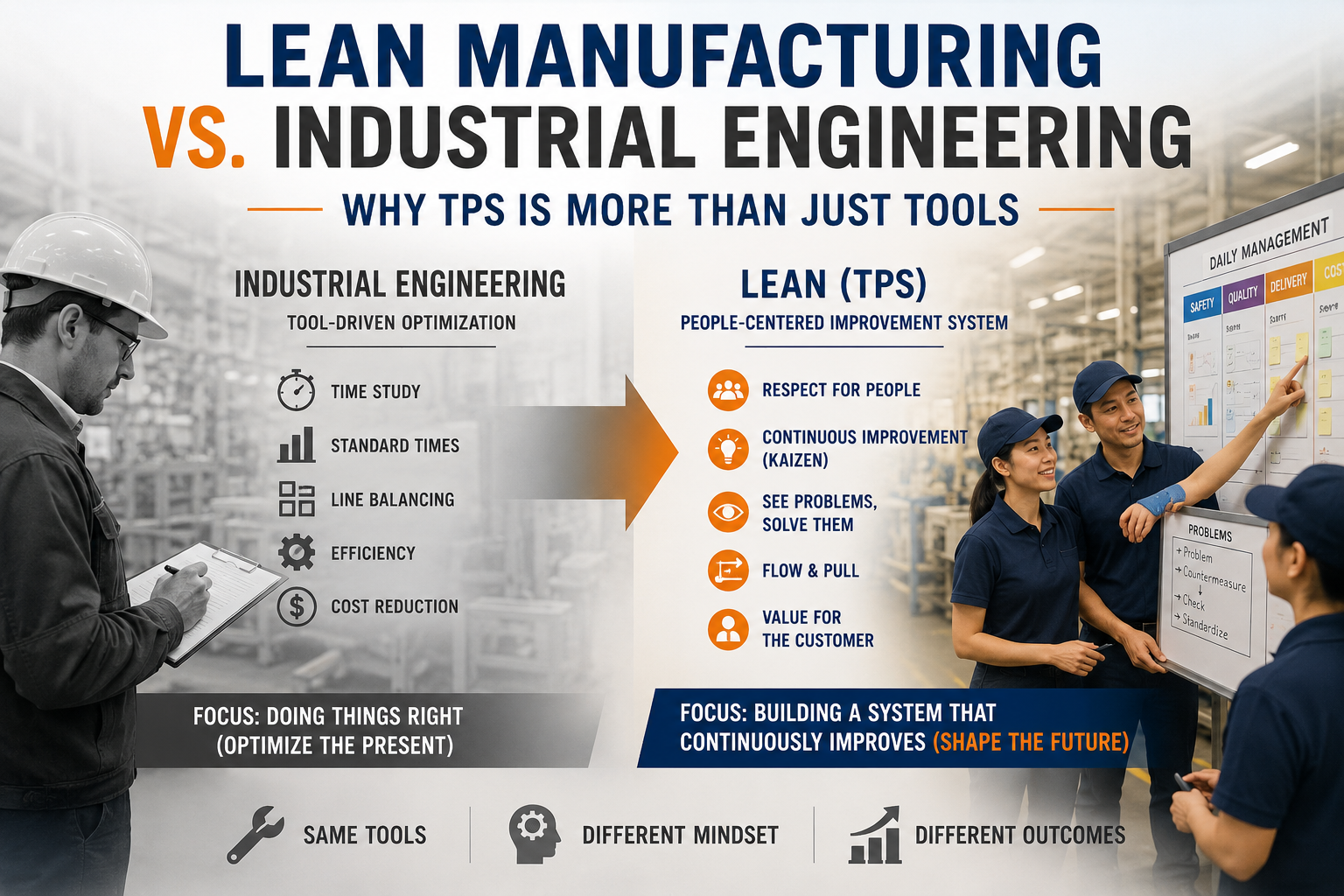
At Toyota they use over ninety tools in their JIT basket of problem solving aids. It’s not these tools that make them successful, it’s their commitment to improvement realised through disciplined routine and behavior, which are duplicated from CEO downwards. Randomly using a dozen tools will not make any company truly Lean even if one wishes to so claim. Benefits from problems solved without value stream considerations will not reflect on the profit and loss accounts, for the gains are overshadowed by losses owing to wastes everywhere else. I had read that at Toyota they have received over forty million suggestions for improvements, that was some time ago. Today the number will be bigger. Imagine they would have solved most of them! It is little wonder every company wants their results, success is hidden in emulating their attitude and habits (culture). It is getting to a point as Taiichi Ohno famously once said, ‘people don’t go to Toyota to work, they go there to think.’ That is the habit to cultivate across all departments beginning with the CEO.
Keep reading
More on Lean Manufacturing
ARTICLE
Lean Manufacturing vs. Industrial Engineering: Why TPS Is More Than a Toolkit
Lean ManufacturingMay 2026